Some miracles arrive quietly, tucked inside the hardest beginnings. Fifteen years ago, three baby girls—triplets unlike almost any other—were abandoned. Today, their names carry both history and hope: McKenzie, Maisie, and Madeline Garrison. Two of them, Maisie and McKenzie, were conjoined at the abdomen and shared legs; the third, Madeline, was born without medical complications. Their biological mother, overwhelmed by economic hardship, couldn’t care for them. What followed was a journey of courage, medicine, and steadfast love—one that transformed abandonment into a life overflowing with family, resilience, and joy. Here’s how their story unfolded.
The girls were born in December 2002. Within weeks, they were fostered by Darla and Jeff Garrison, a couple who had fostered ten times before and were already parents to three children. They longed to expand their family—and when the call came that they could adopt three sisters, they didn’t hesitate. “We had no idea what to expect, but they only needed someone who loved them,” Darla said. Madeline arrived when she was just four days old; Maisie and McKenzie joined the family four weeks later.
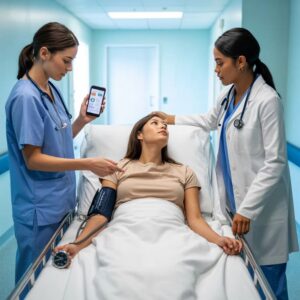
Soon after Maisie and McKenzie’s birth, doctors began preparing for an extraordinarily delicate separation. At Children’s Hospital in Los Angeles, surgeons implanted tissue expanders in the girls’ backs and abdomens to gently stretch their skin. The goal was to ensure there would be enough skin to close once the separation was complete.
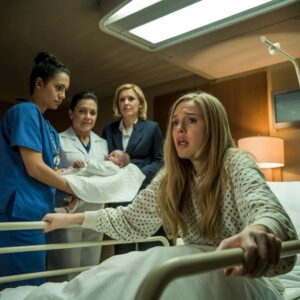
In 2003, when the twins were nine months old, the medical team undertook a 24-hour operation to separate them. The procedure was painstaking and heroic; the outcome, to everyone’s joy, was a complete success. Afterward, both McKenzie and Maisie were left with one leg each. Personalized prosthetics, combined with consistent physiotherapy, allowed them to learn, adapt, and ultimately thrive. They grew healthy and strong, able to fend for themselves without issue.
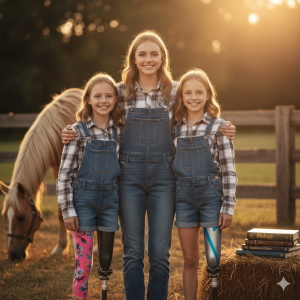
Two years after the operation, Darla and Jeff officially adopted all three sisters. The Garrison family—now eight members—settled on a farm in Iowa, where the little ones even had their own horse. Life widened with ordinary wonders: space to play, animals to care for, and the comfort of a loving home.
The girls attended the same school, and the twins soon became quite popular. Some children were unkind at first, but the sisters learned to shrug it off. They leaned into the classes they loved—PE and art—and kept moving forward with the easy laughter and grit that families often cultivate together. “They love PE and art lessons,” Darla said.
Over time, the triplets flourished into three beautiful girls. McKenzie and Maisie have a normal life expectancy, though they suffer from severe scoliosis and will require surgery in a few years. They undergo frequent tests to make sure they’re growing properly. Even with these medical realities, “there’s no reason why they can’t have a long, happy life,” Darla explained. Supported by prosthetics and physiotherapy, wrapped in the unwavering love of their parents and brothers, they live as fully and joyfully as any children might.
—The most intense passage of their story rests between abandonment and belonging, and within a hospital’s bright, relentless hours. The separation surgery—twenty-four hours of precision and hope—was the crucible. Every moment pressed toward a single, fragile outcome: two girls, once joined at the abdomen and sharing legs, could be safely given separate bodies and independent lives. The tissue expanders had done their work; the surgeons, after months of preparation, pressed forward. When it was done, and the twins were fully separated, relief and happiness spread through everyone who had waited and watched. The danger, the uncertainty, the long night—those gave way to a future the family could finally envision.
Another kind of tension appeared later, quieter but no less real: the questions from schoolmates, the early meanness, the stares and assumptions that so often meet difference. The girls met that pressure with resilience—shrugging it off, finding joy in movement and art, letting their lives speak louder than anyone’s judgment.
What began with abandonment became a testament to what love can build. Today, McKenzie, Maisie, and Madeline live on an Iowa farm with their parents, Darla and Jeff, and their brothers. They have a horse. They have classrooms where PE and art make them light up. They have doctors who keep watch, and plans for future scoliosis surgeries that they will face with the steady support of their family.
Thanks to Darla and Jeff, the girls were given a second chance—one that turned fear into growth, rarity into everyday radiance, and uncertainty into a long, happy life ahead. “We need more people like them,” the message says, and the truth of that lives in every step the girls take on their prosthetics, every test passed, every smile shared. The triplets’ story circulates with a final invitation: thanks for watching; please like and share the video on social networks; we’ll be right back to you as fast as we can.
What lingers is simple and profound: three sisters, one remarkable beginning, and the enduring power of a family who said yes—first to fostering, then to surgery, and always to love.
Disclaimer : This content may be created by AI for entertainment purposes. Any resemblance to real persons, events, or places is coincidental.