The Story of Her Hands
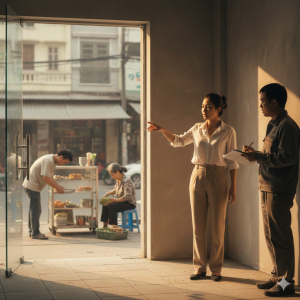
I remember that fateful evening so clearly. My hands were trembling, not from the cold, but from sheer exhaustion. The faint yellow light shone on the hand of a regular client, her skin thin and sensitive. I leaned closer, meticulously trimming away the excess cuticles, my movements slow and precise, just as they had been for years. These hands—the very hands that created beauty for others—had kept me alive in this expensive city, had helped me stand firm when no one offered a lifeline. I used them to create beauty, yet they were powerless against the rot growing inside my own home.
In that rare moment of silence, I realized I had grown accustomed to enduring, my fatigue hidden beneath a layer of glossy nail polish, my resentment suppressed by professional smiles. I used to think, just hold on a little longer, and everything will be fine, but I was wrong.
Just then, my phone vibrated, followed by the frantic, insistent ringing of the doorbell. It gave me no time to prepare. I looked at the screen: the name of lawyer Hùng appeared, along with a brief, cold text message: “They just filed a petition with the court demanding the house be split.” I reread it several times, as if my brain refused to grasp the full meaning of the words. The house I had traded my youth to buy. The house in my name. Immediately after, a voice recording played. My mother-in-law, Bà Lài, spoke in a voice sharp and cruel, cutting like a knife: telling me to go home, telling me to get out of her house.
I sat motionless. In my mind, the memories of the past year flashed not as a touching film, but as cold, stacking pieces of evidence. People often say modern women must be independent, self-reliant, and decisive. Before, I only half-listened. But that evening, for the first time, I understood what it meant to be driven to the wall. They thought I would cry, beg, and ultimately let go, as I had done countless times before. They didn’t know that throughout those years, I had quietly recorded everything: every word, every action, every number.
That night, I reviewed it all, and for the first time in my life, I made a clear decision: I would not just reclaim the house, I would reclaim my right to a meaningful life.
After that night, I stopped avoiding a hard look at my life. To reclaim what was mine, I first had to honestly admit how I had lived all those years.
I worked as a home-based beauty technician. No grand sign, no luxurious space, just a small room constantly smelling of nail polish and disinfectant solution. By day, I served my regular neighborhood clients. By night, I sold small cosmetic items online. Every earned penny reached my hand slowly. I meticulously kept records, divided every sum, cutting out all unnecessary spending. There were months I couldn’t afford a single new item for myself, but I never allowed myself to give up.
The house in my name wasn’t a stroke of luck. It was built with late nights, days without rest, and times I silently sacrificed personal joy for future security. I believed that as long as I had a roof in my name, I would be stable enough to withstand everything else.
But Đức, my husband, didn’t see it that way. Long unemployed, he viewed my work as temporary, as something that produced money effortlessly, unworthy of respect. In moments of frustration, he would utter sarcastic remarks, as if everything I did was just “women’s trivial nonsense.” I stayed silent. Not because I believed he was right, but because I thought family stability was more important than conflict.
That stability was merely superficial. Beneath the surface, everything was silently rotting. I discovered that my mother-in-law, Bà Lài, had become involved in gambling. The amounts of fast, unsecured loans grew. The secretive late-night phone calls became more frequent. I wasn’t allowed to ask questions or intervene.
Until one day, I noticed the familiar deed was no longer in its usual spot. In its place was a color copy, so similar that had I not looked closely, I would have believed it was real.
I didn’t confront them immediately. I quietly checked, cross-referenced, and the pieces of the puzzle began to emerge, chillingly clear: My real house deed had been swapped and used as collateral for high-interest loans. Everything suddenly made sense. The lawsuit to split the house was no accident, and certainly no misunderstanding. It was the result of a deliberate chain of fraudulent acts. The house I had painstakingly saved for was now being used to secure debts from gambling tables where I had never placed a single bet.
I remember the feeling then was not panic, but a cold dread running down my spine. For the first time, I understood that if I continued to stay silent, everything I had built would be erased. I was no longer facing a simple failed marriage. I was facing a battle over ownership, over truth, and over the value of my own life. And from that moment, I knew I couldn’t continue on as before.
After all the pieces began to emerge, I entered a phase that, looking back, I realize was the most heavily controlled period of my life. It wasn’t loud, or immediately abusive, but every day felt like a slow, precise squeeze, leaving me no room to breathe.
Đức and his mother no longer concealed their intentions. They stated flatly that I had to sell all my business capital to pay off the debts. It was not a suggestion; it was a demand.
Whenever I worked on a client, Bà Lài’s slippers would shuffle outside the door. Her gaze would linger on my workbench, where the jars of colorful polish were neatly arranged. The smell of nail polish, the scent that had sustained me for years, now became the excuse for her contemptuous sneers. She called my work frivolous, a woman’s petty hobby. Đức sneered, saying I only knew how to make others look beautiful, while being useless at home. Each word was uttered so naturally, as if they had the right to decide my fate.
I didn’t argue. I knew if I reacted, they would use it as a reason to intensify the pressure. The conversations became more frequent, sometimes late at night, sometimes early in the morning. They repeatedly brought up the debt, family honor, and how I must sacrifice for my husband. I listened, memorized, and remained silent.
My phone was always in my pocket, set to record. I learned to place it naturally on the table, to breathe steadily so my voice wouldn’t tremble. Once, Đức came close, pointing a finger at my workspace, his voice low but menacing. He said, “If I don’t sell the capital, things won’t be peaceful.” I nodded, not arguing, but in my head, every word was carefully filed away as irrefutable evidence.
I continued to work, still trimming cuticles, painting nails, consulting with clients in a soft voice. No one knew that after each session, I would sit alone, replaying the audio files, listening to short segments to ensure they were flawless. I began to print out statements of all my bank accounts, from the very first savings deposits until the house purchase. Every transaction had a clear origin. I left no detail out.
I distinctly remember the smell of nail polish filling the small room. Previously, it was the smell of self-sufficiency. Now, it was turned into a symbol for them to ridicule me. But it was then I realized that the very thing they despised was the only thing keeping me steady. I no longer allowed myself to be ashamed of my work.
Following my lawyer’s advice, I created a secure cloud storage account. Every evening after everyone was asleep, I quietly transferred every audio file, every bank statement, and every image related to the fake deed. I set a long password, renaming the files with meaningless symbols. I did everything slowly, carefully, the way I used to trim a client’s cuticles.
I also kept the separate property commitment agreement—something I once thought was a mere formality. Now, it became a crucial part of the whole picture. I took photos, stored them, and sent copies to the lawyer. Every small action carried more weight than I imagined.
Đức grew restless seeing my lack of reaction. He raised his voice, changed his attitude, alternating between gentle and aggressive. But I had learned one thing: reacting only made them stronger. Silence, recording, and preparation were the only ways to protect myself. I slept very little during those days, but strangely, I was no longer panicking. Instead, there was a state of cold, absolute clarity. I knew where I stood in this story. I was no longer the woman who only knew how to endure, hoping things would magically improve. I was accumulating strength, waiting for the right moment.
The pressure didn’t cease as I had hoped. It changed shape, changed tone, but the intensity increased significantly. I entered a phase that, looking back, I understand was when everything was pushed to the final limit—where one is forced to choose between being crushed or rising with everything they have left.
I returned home late that day. The house was darker than usual, the atmosphere so heavy I could feel it the moment I opened the door. My workbench was disturbed. The familiar jars of polish were not in their place. I walked faster, my heart pounding. And then I saw them: my tools were smashed, scattered on the floor. The things I had spent years purchasing and maintaining, one by one, were now treated as garbage.
Đức stood there, his eyes no longer avoiding mine. Beside him, Bà Lài stood with her arms crossed, her expression utterly cold. No one needed to say another word; I knew this wasn’t an outburst, but a calculated setup.
Đức threw a paper in front of me: a house sale agreement, with the familiar copy of the deed on top—but I knew it wasn’t the real one. He told me I had to sign. His voice was strained, repeating every word as if it were a command. Bà Lài stood behind, reiterating the debt, the family honor, and how as a daughter-in-law, I should know my place.
I looked at the paper, then back at the shattered tools. In my mind, everything became terrifyingly clear: this was no longer a threat, it was an action, it was coercion.
“I won’t sign,” I said, very slowly and clearly.
It was then I saw Đức’s eyes change. He took a step closer. The distance between us closed in a few short steps. He repeated that I had no other choice.
I turned and walked straight toward the inner room. I knew the real deed wasn’t in its old spot. I had suspected it for a long time, and at that moment, a single thought emerged: I have to get it back. Right now.
I opened the closet, rummaging through the compartments. My hands were shaking, but my mind was strangely clear. I heard them behind me, heard their steps approaching. Just as I reached the hidden stack of papers deep inside, a sudden, strong force pushed me forward. I didn’t have time to brace myself. A sharp, searing pain shot straight from my wrist up my arm.
I lay there. The floor was ice cold beneath me, my head reeling. In that moment, I recognized a truth I had never dared to face before: I wasn’t just being deceived; I was being physically abused.
I got up very slowly. My wrist hurt so much I couldn’t move it normally. Blood was seeping from a long scratch. I looked at my hand—the hands that had sustained me, that had helped me endure for years. And for the first time, I saw them literally injured.
No one apologized, no one showed remorse. Instead, there was a heavy silence, as if what just happened was inevitable. I stood up, cradling my aching arm, and backed away. There was no room for fear in my mind anymore, only one thought: the line had been crossed.
I pulled out my phone, my hand trembling, but I dialed the right number. When lawyer Hùng answered, I didn’t waste time. I spoke through tears, but every word was clear, decisive. I said I had enough evidence. Not just financial fraud, not just the fake deed, but physical violence, destruction of property, and coercion to sign a sale agreement.
On the other end, Hùng was silent for a second, then told me to preserve the scene and protect myself. I listened and nodded, though I knew he couldn’t see me.
The call ended. I sat down on a chair, breathing deeply. The pain in my hand was still there, but it no longer made me panic. It became living proof of what I had just gone through. At that moment, I knew I had crossed a point of no return. I was no longer the woman who only knew how to save up in silence. I was no longer waiting for them to stop themselves. I had looked directly at the truth, no matter how brutal.
I got up and began to collect the shattered pieces of my tools. Not out of regret for the objects, but because I wanted to close a chapter with my own hands. Every piece I picked up was a reminder: I had come too far to turn back.
Just as dawn broke, I was awake. My wrist still hurt. Every small movement reminded me that what happened last night was not a nightmare. But unlike previous times, the feeling within me was no longer panic. It was absolute clarity—the kind of clarity that only appears when a person has reached rock bottom and has nothing left to hesitate about.
I dressed simply, no makeup, no attempt to look strong. I only needed to be clear. As I walked out of the house, I knew I wouldn’t be coming back the way I left.
Lawyer Hùng was already waiting. The files were neatly organized. I saw in them the things I had quietly prepared for so long: Audio recordings, bank statements, the separate property agreement, photos of the destroyed tools, even the evidence of the fake deed. Each document was a part of the story I had endured in silence.
We submitted all the documents in the correct order, without argument or lengthy explanation. I signed my name on the necessary papers with a strange feeling: not nervousness, but relief. As if I had just put down a burden I had carried for far too long.
At 6:00 AM, we returned to the house. I did not go in alone. The local police and the court bailiff accompanied us. I stood behind them, neither avoiding nor leading the way. I let the law do its part.
The door opened. Đức and Bà Lài were stunned when they saw the people standing before them. I clearly saw the confusion on their faces—an emotion I had never witnessed before. There were no more shouts, no more threats, just a heavy silence, forced to confront the consequences.
A record was made on the spot. Every item was noted, every unusual sign examined. I stood nearby, listening but not intervening. I didn’t need to say anything more. What needed to be said was already on paper.
When the Bailiff read the notice requiring them to vacate the house according to regulations, I looked straight at Đức. His gaze quickly shifted away. Perhaps for the first time, he understood that everything had slipped out of his control.
I spoke, my voice neither loud nor soft, just loud enough for everyone to hear. I said that from now on, everything would be handled by law and invited them to work with the lawyer. Not a word of reproach, not a word of hatred, just a concluding statement.
Once all the necessary procedures were complete, I went back into the room and retrieved my old suitcase. Inside were the remaining tools—the ones that hadn’t been smashed. I packed them carefully. Each item I placed down was a part of my life, not to cling to the past, but to carry forward.
I didn’t look around the house one last time. I didn’t need to. What was left behind had ceased to belong to me long ago.
As I stepped outside, I clearly felt the morning air on my face. It was cold but pleasant. I took a deep breath. For the first time in many years, I felt I was breathing with my own lungs. I left not in the posture of someone fleeing, but of someone who had opened the door for herself.
I won the lawsuit, but more importantly, I didn’t lose myself in the battle.
Years later, I stood at a small intersection in the city. I happened to see Đức carrying a tray of bowls, his shoulders slightly stooped as if accustomed to the hardship. Bà Lài stood near the kitchen, quickly picking vegetables, her voice still sharp but weary. They worked hard, like anyone else. For the first time, that image did not trigger my anger. I didn’t need to retaliate. Life had worked itself out.
I got out of the car, adjusted my sleeve. Across the street, a new commercial space had been leased. Today, I was here to oversee the opening of a new branch of Homes Spa. I walked past the eatery. Just then, Đức looked up, his eyes meeting mine as if touching something he no longer had the right to name. Bà Lài also looked out. Her eyes paused for a beat, as if realizing the woman she once chased away was standing here, frighteningly calm.
I didn’t walk in, I didn’t ask about their health, I didn’t talk about my life. I simply nodded very slightly, acknowledging that I had seen them. Then I turned and continued toward the new space. Every step I took carried no arrogance, only certainty. I knew I was walking to where I belonged.
Standing in the empty space, I looked down at my hands. These hands had once trembled with fear, had been injured trying to snatch back a house deed. Now, these very hands were directing a new space, a new life. I realized one thing: Freedom does not come from having more than others. Freedom comes from no one having the right to take away what belongs to you.
I looked up toward the light ahead. My hands had once been merely tools to earn money. Now, they were the measure of my freedom and my courage. I saved myself through difficult choices, through clarity when everything seemed to collapse, and by not allowing the pain to turn me into a bitter person. Peace is when I no longer need anyone’s permission to live.
I left the old house with a suitcase of tools. I stepped into my new life with those same hands. And this time, my hands were not just creating beauty for others; they were rebuilding a life for myself, day by day, quietly and persistently.
Disclaimer : This content may be created by AI for entertainment purposes. Any resemblance to real persons, events, or places is coincidental.