THE SACRIFICE BENEATH THE GLITTER
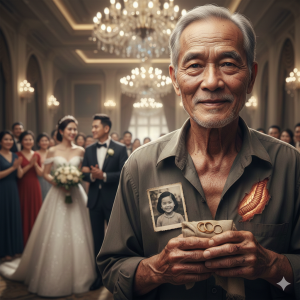
The cold in Hanoi during the days leading up to the Lunar New Year was strangely cruel. It didn’t just nip at the skin; it felt like frozen needles burrowing through the flesh, piercing the bone marrow of a body already exhausted by years of labor.
By 11:00 AM, the basement kitchen of the Dai Nam Hotel was as chaotic as a riot. The clattering of porcelain, the roaring gush of faucets, and the booming commands of the head chef echoed like thunder in a cavern. I stood huddled over a colossal sink, shrouded in a mist of steam that offered no warmth. The water here was always ice-cold. People say five-star hotels are the pinnacle of luxury, but that elegance lived upstairs in the grand ballroom where guests in velvet and silk toasted with vintage wine. Down here, in the underworld of the laborers, there was only the smell of rancid grease clinging to yellowed walls and a cold that carved into the soul.
I clenched my jaw, trying to suppress the throbbing pain radiating from my fingertips to my brain. My hands were a sight that would make anyone shudder—swollen, beet-red, like old ginger roots buried too long in frozen earth. The skin at the joints was cracked and weeping blood. Each time I plunged them into the gray, chemical-laden suds, I had to stiffen my entire body to keep from screaming.
“Hey, old Man Tam! Stop daydreaming!” Hung, a kitchen manager in his thirties, hissed behind my ear. He kicked a plastic bucket of scraps near my feet, splashing dirty water onto my frayed trousers.
“I’m on it, sir,” I mumbled, head low, scrubbing a plate with a rag as coarse as sandpaper.
“Today is a VIP wedding—the son of a billionaire. If you chip even one plate, I’ll dock your entire month’s pay. I don’t know why HR hires such slow, pathetic old men,” Hung grumbled before his leather shoes clicked away across the slippery tiles.
I quickly hid my hands under my filthy apron as the younger kitchen maids walked by. I was terrified of their pity, terrified they would see these hands—hands that had once carried tons of cargo and held my little sister, Lan, during floods. Now, they were just pieces of mangled flesh. As a sharp edge of a porcelain dish sliced into a fresh crack on my finger, a ribbon of crimson swirled into the white foam. I bit my lip until it bled, refusing to stop. One thousand bowls, two thousand plates—each clean dish was a few cents for Lan, a tiny bit of security for her future.
During the lunch break, I sat on a broken plastic stool in the corner of the warehouse, chewing on cold sticky rice.
“Uncle Tam! Come look at this!” Tuan, a young kitchen hand and the only one who treated me with respect, rushed in with his phone. “The wedding upstairs… I snuck a peek. The bride is like an angel! They say she’s marrying the son of a chairman. Look at her!”
I squinted at the small, shaky screen. In the frame stood a girl in a magnificent white gown, a small crown atop her head, smiling radiantly beside a handsome man.
It was Lan. My little sister.
The rice in my mouth turned to lead. She was so beautiful—just like our mother before the illness took her. Tears fell onto my food.
“Uncle? Why are you crying?” Tuan asked, confused.
“Just… just dust in my eyes,” I wiped my face with my sleeve. “Go on, let me rest.”
Left alone, I remembered the phone call from Lan a month ago. She had begged to send me money for medicine. I had shouted at her, “Don’t be ridiculous! I’m a warehouse manager here. I make twenty million a month! Keep your money for your wedding so your in-laws don’t look down on you.”
It was a lie I had performed for five years. When I left our village for Hanoi, I swore to our parents’ spirits that Lan would never have to hang her head in shame. I had been a porter, a bricklayer, a sewer cleaner, and finally, a dishwasher. But every time I called her, I invented a life of luxury. I even rented suits to wear when I visited home, just so she would believe I was a “manager.”
At 3:00 PM, I managed to slip away to the staff lockers. I pulled out a black plastic bag containing a gray vest I’d bought at a thrift market five years ago. It smelled strongly of mothballs—the scent of poverty. I put it on over a frayed white shirt, buttoning it to the chin to hide the massive, roped scar on my throat—a souvenir from a fire long ago.
I didn’t intend to join the party. I had no invitation, and even if I did, I wouldn’t dare enter. I just wanted to stand in a dark corner, see her in her dress once, and then leave.
I crept toward the second floor, following the scent of fresh lilies and expensive perfume. I found the bridal waiting room and peeked through the crack of the door. Lan was there, her shoulders shaking as she wept. Her fiancé, Khanh, was kneeling beside her, wiping her tears.
“I miss my brother, Tam,” she sobbed. “He’s too sick to come. I feel so guilty, Khanh. All these years I focused on school and work, and I never truly saw how he was living.”
“Don’t cry, my love,” Khanh comforted her. “Tomorrow, we’ll cancel the honeymoon. We’ll go to Hanoi and take him to the best hospital. I’ll make sure his hands are healed, no matter the cost.”
I muffled my sobs. Thank God, she had chosen a good man. But then, a sharp, shrill voice cut through the air. A stout woman in red velvet, dripping in gold, marched in.
“Stop that blubbering!” she snapped. It was Khanh’s aunt, Mrs. Lieu. “Do you want everyone to know you come from nothing? Today is for VIPs—ministers and CEOs. Don’t let your ‘dirt-under-the-fingernails’ relatives show up here to embarrass us. I’ve told security to throw out anyone suspicious.”
Every word was a slap. I shrank further into the shadows. She was right. I was exactly what she loathed. If I walked in now, I would ruin Lan’s life.
I retreated to the main ballroom, hiding behind a massive marble pillar draped in vines. From there, I watched the ceremony. When the music started and Lan walked down the aisle on the arm of her father-in-law, Mr. Phat, my heart nearly burst. She looked like a queen.
Suddenly, the music stopped. A woman screamed. “My ring! It’s gone! My five-billion-dong diamond ring!”
Chaos erupted. The woman, a wealthy guest, pointed toward the corner where I stood. “Him! That old man! He’s been lurking behind that pillar. He doesn’t belong here!”
Dozens of eyes turned toward me—eyes full of disgust and accusation. I panicked, my hands instinctively clutching my chest where I had hidden a small pouch.
“Look! He’s hiding something in his jacket!” someone yelled.
Mrs. Lieu appeared, a triumphant sneer on her face. “Security! Grab this beggar! I knew he was a thief the moment I saw him!”
Four guards tackled me. “I didn’t take it!” I cried, but a guard twisted my arm—the one already crippled by labor. A sickening pop echoed, and I screamed in agony. They ripped open my vest, tearing the buttons off my shirt. In the struggle, a guard shoved me hard. My head slammed against the sharp edge of a marble pedestal.
Hot blood gushed down my forehead, blinding one eye. I lay on the floor, humiliated, as they pulled a small cloth bundle from my pocket. “No… please… that’s for my sister…” I wheezed.
“Brother Tam!”
A scream of pure anguish tore through the room. Lan, ignoring her husband and the crowd, sprinted down the altar. She tripped on her long train, stood up, and—in a moment of raw desperation—tore the expensive lace of her skirt to free her legs. She kicked off her heels and ran barefoot across the cold floor, throwing herself over me.
“Stop! Don’t touch him!” she shrieked, shielding my bloody head with her white veil. “He’s my brother!”
The room went silent. Mrs. Lieu gasped. “Lan, are you mad? This thief is your brother?”
“Shut up!” Khanh roared, stepping forward. He stripped off his groom’s jacket and covered us. “This is my brother-in-law. The man who raised my wife. How dare you lay a hand on him!”
Just then, Mr. Phat, the Chairman, walked into the center of the fray. He looked at the scene, then his eyes landed on my exposed chest. The torn shirt revealed a horrific, ropey burn scar that stretched from my neck to my heart.
Mr. Phat froze. His face went ghostly pale. He knelt down, his expensive suit soaking up my blood. He touched the scar with trembling fingers.
“This scar… the ‘Centipede’ scar…” his voice broke. “It’s you. The young man from fifteen years ago.”
I looked at him through the blood. I recognized the mole on his ear. “Hello, Mr. Phat. It’s been a long time.”
Fifteen years ago, Mr. Phat was a struggling factory owner. A chemical explosion had trapped him under a beam. Everyone ran, but I had stayed. I used my body as a shield when the tanks blew up. The chemicals had melted my flesh, but I had pulled him out. I never asked for a reward; I had simply disappeared into the hospitals.
“You… you are the savior I’ve been looking for all these years,” Mr. Phat sobbed, bowing his head to my feet.
The “stolen” ring was found a moment later—it had merely caught on the guest’s own shawl.
The atmosphere shifted from hostility to profound shame. Mr. Phat stood up, his voice like iron. He fired the guards on the spot and turned to Mrs. Lieu. “You are no longer part of this family or this company. Leave. Now.”
He turned to the crowd and announced, “Today, I have found my greatest benefactor. I am transferring 5% of this corporation—500 billion dong—to Mr. Tam immediately. He is now the eldest brother of this house.”
The room erupted in applause, but I shook my head. I reached into the torn bundle the guards had dropped. Inside were five plain gold rings—the result of ten years of dishwashing.
“Mr. Phat,” I whispered, “I didn’t save you for money. I don’t want your billions. I only want you to love my sister.” I turned to Lan, placing the rings in her hand. “This is my wedding gift to you. It’s clean money, Lan. It’s all I have.”
Lan wept into my chest. The entire ballroom was in tears, moved by the dignity of a man who owned nothing but a heart of gold.
After the doctors bandaged me, Mr. Phat offered a fleet of limousines to take me home. I refused. I wanted to go back to my village to tell our parents that Lan was safe. I walked out of the five-star hotel, my silhouette limping under the yellow streetlights of Hanoi. My body was broken, and my pockets were empty, but as I touched the scar on my chest, my heart beat with a peace I hadn’t known in years. I had finished my mission. I was just a dishwasher, but in the eyes of those who mattered, I was a giant.
Disclaimer : This content may be created by AI for entertainment purposes. Any resemblance to real persons, events, or places is coincidental.