The Emperor scorned the Empress’s looks and forbade her from attending the feast. Yet at the banquet, she transformed—and to his surprise, he fell hopelessly in love.
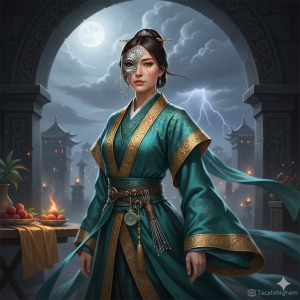
She opens her eyes in a place she doesn’t recognize. “Where is this? Who am I?” Voices swirl around her—“My Lady, you’re not dead!”—and then sharper ones bite: “So what if you were the legitimate daughter? Aren’t you bowing at my feet now?” She realizes she has crossed time and awakened in the body of the Empress: disfavored, scarred, unloved by the Emperor, burdened by the old Empress’s resentments that still cling like smoke.
If she is to carry the former owner’s grief, she will repay it a hundredfold. The palace trembles with intrigue—Quyi (the favored Consort), the Emperor Mộ Dung Tôn, the Empress Dowager, courtiers, servants, and a rival prince Cẩn Dương—each moves a piece on a board stained with jealousy, poison, and politics. The Empress, Lâm Tri Vi, chooses her weapon: composure sharpened by knowledge. “Fetch me panax notoginseng. And make me a half-face mask.” When a maid flinches under her gaze—terrified of the birthmark she’s borne all her life—Tri Vi promises treatment. Then the insults begin: “Ugly creature—get out!” A herald from Consort Quyi arrives to demand the Empress attend the Emperor’s “Lychee Banquet.” Tri Vi answers coldly: let Quyi come and pay respects herself.
Soon, palace voices rise to a screech, the Emperor appears, and accusations fly—irreverence, ugliness, insolence. Tri Vi strikes back with protocol and law: the messenger committed grave disrespect; punish her. The Emperor bristles—“Do you ever see me as Emperor?”—and Tri Vi replies that her position was granted by her mother’s power, not love. He orders the messenger punished. Later that night, he says he will sleep in the Empress’s palace. Tri Vi warns him to keep his dignity; he mocks her scars and compares her unfavorably to “Nhu Nhi” (Consort Quyi). She meets contempt with a scalpel: if he seeks pigs, the imperial sty awaits. Then she coolly suppresses his lust with an herbal trick—no silver needles required—“You’ll feel calm and abstinent for a few days.” He retaliates by cutting her stipends in half.
The capital erupts in plague. Physicians fail; servants die; tens of thousands perish. Consort Quyi moves to weaponize fear, sending a sick maid to the Empress’s service. Tri Vi accepts the girl and quietly concocts medicine, asking her to test it to save lives. The Emperor arrives, suspicious but curious. When guards block his entry for fear of contagion, Tri Vi announces she has found a remedy. The cured maid kneels in gratitude. The Emperor begins to see she has changed.
At the lychee banquet, Quyi preens while courtiers flatter her beauty and the Emperor’s adoration. They sneer that the Empress hides behind a mask and should be ashamed. Tri Vi arrives looking “ugly” still—but the maid’s dark birthmark has mysteriously vanished. Tri Vi forces officials to account for their mouths; if her scars are gone, will they accept punishment? She unveils a flawless, country-toppling face. The crowd staggers; a bold official blanches and begs forgiveness. The Empress Dowager arrives, backs Tri Vi’s authority, and orders punishment for those who questioned the Empress.
Quyi’s plots escalate—murder, slander, poison in fruits and cups, and later, a faked pregnancy to win the Emperor’s heart. Tri Vi counters with forensic calm: she examines a corpse, proves poisoning time with “clotted blood, silver turned black,” and shows the victim was poisoned long before entering her palace—someone tried to frame her. The Emperor punishes Quyi. Tri Vi drinks tea and writes the debt in her heart. At the next banquet, she is forced to wear a mask; she keeps her counsel and saves her strength. Then she restores a servant’s scar, again proving her skill.
But Quyi is relentless. She sends a “grand gift” to the Empress—death hidden inside—then screams for justice when the trap goes off. Tri Vi demands autopsy; the Emperor allows her to prove innocence. She does, piece by clinical piece. Quyi is struck and forced to kneel.
The court begins to bend.
– The Emperor’s disdain turns to wary interest. He accuses her of scheming with the Empress Dowager to force him to share a room; she denies plotting, insists the Dowager is simply discerning. He taunts her, she parries. When he tries to force himself, she doses him into restraint. Then plague—thirteen thousand dead and counting—rolls through the capital. Tri Vi’s medicine works. The Emperor spends a night in her palace, curious and conflicted. “You truly can heal?” She answers with cured bodies.
– Quyi, threatened, unleashes slander. She claims the Empress hides behind a mask because she is unfit as Mother of the Nation. Tri Vi offers a demonstration at the lychee banquet; it becomes a theater of justice: officials eat their words; the Empress Dowager intervenes; punishments fall. The Emperor notices Tri Vi’s poise, says he will bring proper attire for her next event, and the court begins to whisper that the Empress might not be so easy to destroy.
– The Empress Dowager pushes her agenda: stability through heirs, politics before sentiment. She gives incense to ensure the Emperor visits the Empress more often. Tri Vi and the Emperor stage a “scene” before the Dowager’s spies—an embrace, then icy restraint—to protect reputations. When the Empress is truly vulnerable, Tri Vi refuses to let him cross the line. Yet that very night, temptation and a drug’s heat blur boundaries, and they share their first true intimacy—awkward, tender, fated. It is no longer just politics.
– Quyi fakes a pregnancy. She claims exhaustion, demands attention, and asks to move outside the palace for “safety” after hinting the Empress is possessed. Rumors spread: the Empress’s transformation is “demonic.” The Khâm Thiên Giám (Imperial Astronomer) declares an ominous omen: “The Ziwei star divides—calamity in the central palace, bloodshed in the harem; the nation at risk.” The Emperor nearly explodes. He protects Tri Vi, refuses to confine her, yet the gossip lingers.
– The Empress faces a trap: Quyi accuses her of pushing her while pregnant, but witnesses saw nothing. Tri Vi refuses to yield to fear; she commands the scene, ensures safety, and warns Quyi not to exploit the sacred position of motherhood. The crowd wavers.
– Mid-Autumn arrives. The Emperor’s brother Dương Gia (Cẩn Dương) returns, handsome and bold, with a history entwined with Tri Vi. Quyi uses the festivity to strike. She pours wine; the Empress drinks; Quyi clutches her stomach and cries pain. A physician announces “safflower powder” in the cup—an agent known to cause blood loss and miscarriages. The Emperor rages, orders the Empress to the Cold Palace. Tri Vi demands proof: Quyi’s pregnancy must be confirmed. Cẩn Dương brings an elder physician, Diệp Đại Phu, who declares the truth—Quyi was never pregnant. She is stripped of rank, reduced to “Nhu Phi,” but spared death due to past affection. Quyi collapses under an old “gu” poison—one she claims to have transferred from the Emperor to herself long ago—pleading, manipulating, tying her suffering to the Emperor’s heartstrings.
– Tri Vi, meanwhile, is struck by a resurgence of a gu in her body—an ancient poison that ignites under certain fragrances. She collapses. The palace scrambles for the only cure: Tianshan Snow Lotus. Cẩn Dương races beyond the capital, risks his life, and returns with the sacred herb just in time. Tri Vi survives. The Emperor, watching her pale face, bleeds his own arm when he thinks it might relieve her pain. He vows—he will not lose her.
– Yet politics gnaw. The Empress Dowager extols a new beauty—Diệp Quý Nhân—and pushes the Emperor to diversify his affections “for the sake of the dynasty.” Diệp, cunning and fresh-faced, courts the Emperor’s favor. The Dowager and Diệp press etiquette hard; a bold maid, Phán Dân, speaks too frankly and becomes a target. The Dowager orders punishment; Tri Vi resists; the Emperor, trying to protect Tri Vi from open war with the Dowager, orders the maid to learn “discipline” under Diệp. Tri Vi warns: she will never let cruelty stand.
– Quyi and Diệp weaponize rumor. They accuse Tri Vi of trysts with Cẩn Dương. Nhu Phi (Quyi) storms the Empress’s palace, drags the Emperor to catch her “in flagrante.” The room is empty, save a hidden figure forced out—Lăng Tiêu Tiêu, not Cẩn Dương. Nhu Phi’s plot collapses. By her own vow, she must kneel and accept a hundred blows. Tri Vi lets the spectacle teach the court: those who slander the Empress will swallow their own shame.
– Tri Vi bakes hawthorn cakes for the Emperor; the Emperor, for the first time, apologizes sincerely. He promises to prove his devotion with actions, not words. Nights become warmer; mornings gentler. The Emperor asks her to dress him; he lingers; he says he will return at dusk.
– Diệp Quý Nhân retaliates. She frames Phán Dân for theft—pearls gone missing—and orders a brutal beating. Tri Vi arrives and stops it cold. The Emperor storms in; the room crackles. He sends Diệp to the Cold Palace, promises Tri Vi that he forbids anyone from hurting her again, lifts Tri Vi’s confinement, and vows to shield her.
– Then, a thunderclap: Lâm Giang, the Empress’s kin and a general at the frontier, is accused of treason for not returning. The Dowager demands the Empress be deposed. The Emperor refuses; Tri Vi disappears from the palace to stop catastrophe herself. She needs a military tally—a “binh phù”—to confront the conspiracy outside the capital. She meets Cẩn Dương. He wants more than the tally; he wants leverage, ascendance, and her past affection. He poisons her and tries to steal her purity and the tally. She threatens the only antidote. He lunges.
– The Emperor arrives. Steel sings. Cẩn Dương threatens to kill Tri Vi. The Emperor advances—“Touch her, and I will end you.” Guards clash. Tri Vi tells him to stay back; a loyal general crashes through the fray to save them. Cẩn Dương flees with shadows and schemes; he’s not finished.
– Back at the palace, the Emperor lies wounded, bleeding hard. Tri Vi bars the doors, refuses court physicians—who might be compromised by Cẩn Dương—and tends the Emperor herself. The Dowager arrives with outrage and a phalanx of doctors. Tri Vi holds, insists she can stabilize him. Blood clots under expert hands; the Emperor’s breath strengthens but does not yet return. The Dowager threatens burial alive if he dies. Tri Vi sits nights beside him, whispering: “I won’t let you go.”
– Days pass—seven, then more. Quyi slithers, promising aid to Cẩn Dương in exchange for future luxuries. She is caught—again—and sent away. The harem buzzes: the Empress who was called demon now keeps the Emperor’s life beating.
Cẩn Dương moves. He buys eunuchs near the Emperor, poisons routines, pushes rumors, and declares himself Emperor at the city gate, claiming the throne by forged decree. He brings his “guard” to open the gates; loyal soldiers refuse. The city trembles. Quyi, allied with Cẩn Dương, screams triumph: “Finally the throne is mine.” She tries to storm the palace gates, flaunting a forged imperial seal. Tri Vi stands before the closed doors, holding the military tally. She orders defenders to hold.
Cẩn Dương launches an assault and bursts through the Emperor’s chamber. He aims to kill both the Emperor and Tri Vi, to ravage the Empress to break the dynasty’s spirit, and to seize the tally that commands the armies. Tri Vi fights back with needles and nerve; soldiers surge in. The Emperor, wounded but not broken, rises with grim strength. Loyalists arrive—“Cứu giá!”—to save the throne. Cẩn Dương is captured.
The Emperor does not kill him. “I want you to live in your failure.” He strips him to commoner status and exiles him to Ninh Cổ Tháp forever. Cẩn Dương screams for death; the Emperor denies it, decreeing that living will be his punishment.
Peace—thin as silk—returns.
Tri Vi collapses from the accumulated poison and strain. The Emperor cradles her. They test for life; there is another heartbeat—soft, miraculous. “We have a child,” he says, astonished, elated. Tri Vi feels dizzy with early pregnancy. The Emperor sends everyone away: he has things to say.
While he lay unconscious, he heard her. He knows she is not of this world, that fate wove their threads from different times. He vows to dissolve the harem and love only her. “Life after life,” he says, “we will not part.” She smiles—at last, a promise made in daylight, not just in the fevered dark.
Outside, the Dowager frets about power, suspects the Lâm clan, pushes another beauty; the Emperor refuses. He tells Tri Vi he will prove everything in deeds. He does: the harem empties.
Quyi lingers like smoke, trying one last bid. Diệp Quý Nhân tries another petty frame. Tri Vi cuts through both with law and steel. In the end, Quyi is reduced, sent away, and Diệp’s cruelty is punished.
The Emperor and Empress, united now, face one more storm—whispers of “Bactrian beauties” presented by court officials to tempt the Emperor. Tri Vi teases him for “drinking foreign vinegar.” He laughs. “You’re already a mother and still jealous?” She swats him—flushed and victorious.
The court is quieter, but not peaceable—dynasty life never is. The Empress Dowager still schemes, but the Emperor stands firm. The frontier remains tense, yet Lâm Giang’s alleged treachery is investigated; Tri Vi refuses to condemn her clan without proof. The Emperor—once cold and contemptuous—now apologizes, kneels to the truth when necessary, and trusts Tri Vi’s knowledge over rumor. He dissolves the harem, returns nightly, and lets her choose the rhythms of their days.
At last, dawns pass without blood at the door. The Empress tends remedies for the people, studies late by lamplight, still the physician who saved the capital and the Emperor. She walks the garden, hand in hand with him, secret smiles flickering when he pretends to chase her—“Go slower—catch me.” He jokes that she should give him more children now that he has abandoned the harem; she rolls her eyes, laughing.
Their story began with scorn, masks, poison, and the chill of exile. It ends—for now—with vows sworn awake, a child quickening, and the Emperor’s quiet promise: “One heart. One life. No leaving.”
Disclaimer : This content may be created by AI for entertainment purposes. Any resemblance to real persons, events, or places is coincidental.