I kicked open my husband’s casket at the burial ground, and instead of his dead body, I found a fresh banana tree stem dressed in his best suit.
That was the moment my old life ended.
Right now, as I write this, I am sitting on a cracked plastic chair in a small, dusty office inside the village police station. A naked bulb hums above my head. Mosquitoes are singing near my ear. Outside, I can hear voices—angry, rising and falling in my mother tongue.
The elders are outside with machetes.
They say I have “desecrated the land.”
They say I have brought a curse on the community.
They say a woman must not behave like this at a burial ground.
But let me tell you something: I do not care.
Because Obinna is not dead.
My name is Nneka, and this is the story of how I buried a banana stem and woke up from a marriage built on lies.
How It Started
I met Obinna four years ago at a friend’s wedding in Surulere.
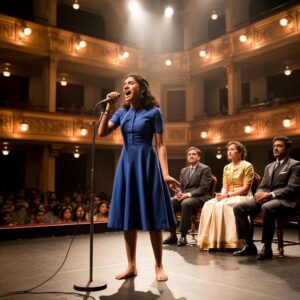
He was the best man, neat like tomorrow—dark blue suit, red tie, shoes that shone like mirror. When he stood to give his toast, his voice rolled through the hall like silk.
“To love is to find your home in somebody’s eyes,” he said, raising his glass.
All the girls sighed.
I just smiled and shook my head. Men and their sweet mouths.
Later that night, when the DJ played Flavour and everyone rushed to the dance floor, Obinna came to where I was sitting.
“You’ve been hiding all night,” he said. “Is it pride or shyness?”
“Neither,” I replied. “Just observing.”
He laughed, the kind of laugh that makes other people around laugh even if they don’t know why.
“Then observe me properly,” he said. “Because I’ve already observed my future wife.”
Three months later, we were married.
Our Marriage
I’m not going to lie—at first, our marriage was sweet. The kind of sweet that makes your friends roll their eyes on Instagram.
Obinna worked in a logistics company on the Island. I had a thriving provision store in Festac that I built from scratch with sweat and sachet water.
Every evening, he would come home smelling of cologne and office AC. I would already be cooking. He would drop his laptop bag, wrap his arms around my waist from behind and rest his chin on my shoulder.
“My CEO,” he would whisper. “My one and only shareholder.”
We didn’t have children, but we had plans.
“Baby, once your shop expands and I finally get that promotion, we’ll try IVF,” he would say, kissing my forehead. “You deserve twins.”
His family seemed to accept me. They called me “Nneka nwa anyi”—our daughter. When we traveled to the village in Umuahia for Christmas, his mother would tie my wrapper herself, as if I was her own blood.
Only sometimes, late at night, I would overhear whispers.
“Four years and nothing?” his aunt would say.
“Maybe she used her womb for money,” another one would joke.
But Obinna always defended me.
“Is it your womb?” he would snap. “Leave my wife alone.”
And so, I loved him more.
I loved him enough to ignore the signs.
The Call
Two weeks ago, I was arranging crates of soft drinks in my shop when my phone rang.
“Hello, am I speaking with Mrs. Obinna?”
“Yes, please.”
“This is from St. Patrick’s Hospital in Lagos. Your husband collapsed at work. You need to come now.”
My heart left my body. I don’t even remember how I reached there—Uber, keke, my legs—I don’t know.
When I arrived, a doctor with tired eyes and coffee breath met me at the corridor.
“Madam, I’m sorry,” he said. “He went into cardiac arrest. We tried, but… he didn’t make it.”
The world blurred. I remember screaming. I remember holding the doctor’s coat and begging him to “try again.” I remember falling on the cold floor and feeling people lift me.
They said I fainted three times.
By the time I woke up in the waiting room, Obinna’s elder brother, Chukwudi, was already there with two other relatives. They were whispering together.
When they saw I was awake, they came to me with long faces.
“Take heart, Nneka,” Chukwudi said, patting my shoulder. “Our brother has gone to rest.”
“I want to see him,” I sobbed. “Please, take me to see him.”
He exchanged a glance with the others.
“It’s not allowed,” he said finally. “According to our tradition, a childless wife must not see her husband’s body until the final dust to dust. If you do, you will go blind and your spirit will never rest.”
I stared at them through tears.
“What kind of tradition is that? We’ve been married four years! I’m his wife!”
His uncle, Papa Ugo, stepped forward. His gray beard shook as he spoke.
“Nneka, listen. Do you want your husband’s soul to be angry with you? Don’t insist. Let us handle things.”
Maybe it was shock. Maybe it was the way they spoke with so much confidence. Maybe it was because I had never really challenged them before.
Whatever it was, I kept quiet.
They quickly took charge. They signed papers. They arranged for his body to be moved to the mortuary. They told me to “go home and rest” while they prepared for the burial.
I went home to an empty bed and a shirt that still smelled like him.
I cried until my eyes swelled shut.
Paying for a Funeral
The next day, Obinna’s family arrived at my house with a list.
“Casket — 1.8 million.
Cow — 600,000.
Catering — 500,000.
Choir honorarium — 200,000.
Brass band — 250,000.
Transport — 300,000.
Miscellaneous — 350,000.”
Total: four million Naira.
“We want to give him a befitting burial,” Chukwudi said. “He was a great man. People are coming from all over.”
My head spun.
Four million?
“Nneka, you know our brother liked big things,” his cousin said. “Let us bury him like the king he was.”
He was right, in a way. Obinna always said, “If you are doing something, do it well or don’t do it at all.”
So I did what a grieving wife who loved too much would do.
I sold my provision store. The shop I had built from scratch. The place that smelled like my hard work.
I sold my car.
I emptied my savings account.
I handed them four million Naira in two envelopes, my hands shaking.
“Anything he needs,” I whispered. “Let him rest well.”
They nodded solemnly and said, “You are a good wife.”
I believed them.
The Night Before
The burial was set for a Saturday. On Friday night, I couldn’t sleep.
I lay on the bed, staring at the ceiling fan as it rotated lazily.
Around 2 a.m., I drifted into a strange dream.
In the dream, I saw Obinna sitting at a long table, wearing the navy blue suit I loved. There was roasted chicken on a tray, bottles of red wine lined up. He was laughing—oh, that laugh I used to love—and raising a glass in a toast.
When he saw me, he grinned. “Nneka, my investor!” he shouted. “Thank you for sponsoring the celebration!”
I frowned. “What celebration?”
“Our new life, of course,” he replied. Then, as he lifted his glass, his image blurred, and beside him, a woman appeared—pregnant, smiling.
My younger sister, Chidinma.
I woke up with my heart pounding.
Sweat soaked my nightgown. I told myself it was grief and stress. I told myself strange dreams were normal.
But somewhere deep inside my chest, a small voice whispered:
Something is wrong.
The Burial
The sun was angry that morning.
By 10 a.m., the compound in Umuahia was full. Women in matching wrappers wailed, rolling on the ground. Men in red caps sat under canopies, drinking palm wine and discussing politics.
The casket was white and gold, shining like something out of a music video. There were flowers. There was a band. People were eating jollof, taking pictures, live-streaming.
I sat under the family canopy, wrapped in black lace, my eyes swollen. Whenever I tried to stand and go near the coffin, someone would hold my arm.
“Don’t go close,” they warned. “Tradition.”
When the priest finally finished his long sermon and they started carrying the casket to the grave, my spirit began to scream inside me.
The dream replayed in my head.
Obinna laughing.
Eating chicken.
Drinking wine.
Alive.
Nneka… open that wood.
The voice in my chest refused to keep quiet.
As the pallbearers started lowering the coffin into the ground, I jumped to my feet.
“STOP!” I screamed.
The band stopped. The priest stopped. Even the crying women paused.
All eyes turned to me.
“I must see him,” I shouted, my voice shaking. “I must see my husband’s face!”
Papa Ugo hurried forward, waving his walking stick.
“Are you mad?” he hissed. “You want to break ancient customs? Do you want to kill us all?”
“Let the curse come!” I yelled, and something inside me broke loose.
People tried to hold me, but grief made me strong. I pushed them aside, stumbled to the edge of the grave, and jumped into the hole.
Dust filled my nose. My black lace gown snagged on the rough edges of the coffin. The pallbearers shouted. Someone tried to drag me out.
I snatched the hammer from the undertaker and glared up at them.
“Let me see him,” I said, my voice low and deadly. “Or I’ll haunt you all myself.”
Maybe they saw something in my eyes. Because they backed away.
My hands shook as I placed the hammer on the lock of the casket.
“Nneka, don’t do it!” Chukwudi screamed from above.
I raised the hammer and smashed the lock once, twice, three times.
The lid cracked open.
I took a deep breath, whispered “Obinna…” and lifted it.
What I saw inside was not my husband.
It was a banana tree stem.
The Banana Stem
For a moment, my brain refused to process what my eyes were seeing.
A thick, heavy banana stem, fresh and green, lay where a body should have been. It was wrapped in white cloth. It wore the very Italian suit I bought for Obinna last Christmas, the one he said he was saving “for something special.”
His favorite cap was perched on top like a crown.
Someone above screamed. Another person fainted. The priest dropped his Bible.
My ears rang, but inside the grave, everything was quiet.
I reached out with trembling hands and touched the stem. Cool. Damp. Alive.
Not a corpse.
“Where is my husband?” I whispered.
Nobody answered.
I raised my head and looked up. Faces peered down—some horrified, some guilty, some blank like wooden masks.
“WHERE IS MY HUSBAND?!” I screamed, lifting the banana stem with both hands. Bits of soil rained down as I shook it.
Silence.
Then, my phone vibrated in the pocket of my gown.
I let the stem fall back into the coffin and fumbled for my phone with shaking fingers.
It was a notification from Instagram.
Chidinma just posted a photo.
The Photo
My younger sister, my father’s last-born, my mother’s pet, the girl whose school fees I paid when our parents couldn’t.
I tapped the notification.
The app opened to a picture of Chidinma in a luxurious airplane cabin, champagne glass in hand. She was glowing, her makeup perfect. Beside her, kissing her cheek, was a man in a dark jacket.
Obinna.
My “dead” husband.
The location tag read: “Japa to Canada – New Beginnings.”
My vision blurred for a second. Then the caption loaded:
“Goodbye Nigeria! Me and baby are off to start a new life. God is faithful! 💍✈️🇨🇦”
My fingers went numb. The phone slipped from my hand and fell into the coffin beside the banana stem.
Obinna wasn’t dead.
He was alive.
He was on a plane.
He was kissing my sister.
All the pieces clicked together like a cruel puzzle.
The refusal to let me see his body.
The rush to plan the burial.
The outrageous expenses.
The way his family kept whispering whenever they thought I wasn’t looking.
I clambered out of the grave, my black gown torn, my hands covered in dirt.
Nobody tried to help me.
They just stared, as if a ghost had crawled out.
The Confession
I stood in front of them, shaking, my face streaked with soil and tears.
“You knew,” I said softly, looking at Papa Ugo. “You all knew.”
His lips trembled. He opened his mouth, closed it again.
“Speak!” I shouted.
He stared at the ground.
“Nneka… it is not how you think…”
“How is it, then?” I demanded. “Explain to me why I buried a banana stem while my husband is on a plane with my sister!”
Finally, he sighed, shoulders sagging.
“Chidinma is pregnant for him,” he murmured. “We needed an heir. You have been barren for four years. Obinna… he decided… we all decided… it was best this way.”
The world tilted.
Best for who?
For them, who believed a woman without children was half a human?
For a man who couldn’t face his wife and tell her he wanted another?
I remembered every time they called me “barren” in jokes. Every time I smiled and pretended it didn’t hurt.
I remembered how I paid Chidinma’s rent. How I helped her start her makeup business. How I defended her when our parents complained she was “too wild.”
And now she was in first-class with my husband, wearing a ring I never received, carrying a baby I prayed for.
Something inside me snapped.
The Hammer
I don’t even remember snatching the hammer from the undertaker.
I just know one moment I was standing there, and the next moment, the cold metal was in my hand again.
The crowd backed away.
“Nneka, calm down,” someone whispered.
“Don’t tell me to calm down!” I screamed. “I sold my life to bury a banana stem! I sold my shop, my car, my future!”
I turned to Papa Ugo.
“You watched me begging in the mortuary,” I said, voice hoarse. “You watched me cry, you saw me collapse, and you said nothing?”
He couldn’t look at me.
“You are barren—” he started.
The word cut through me like broken glass.
I swung the hammer.
I don’t even know if I hit him or just the wooden table beside him. People screamed and scattered. Some men rushed forward, trying to grab me. Women wailed louder, shouting that I had gone mad.
Maybe I had.
Maybe madness is when betrayal finally becomes too heavy for the mind to carry.
All I remember clearly is the feeling of strong hands pinning my arms, the sound of someone shouting, “Call the police!” and the distant ringing in my ears as my body sagged.
At the Police Station
That’s how I ended up here, in the small office of the village DPO.
He’s a round man with tired eyes and a belly that rests comfortably on his belt. His desk is piled with case files, empty Coca-Cola bottles, and a Bible.
He listened to my story, occasionally licking his thumb to turn a page in his notebook.
When I finished, I slammed my phone—the one I had retrieved from the grave, cracked but still working—on his table.
“Look,” I said. “Look at the picture. Look at the date and time. My husband is alive. They scammed me. They lied to the entire village. They stole four million Naira from me.”
The DPO sighed and adjusted his cap.
“Madam Nneka,” he said, “I understand you are in pain. But this is a family matter. We can’t just go and arrest elders because of burial issues.”
“Family matter?” I laughed bitterly. “Is fraud now a family matter? Is faking someone’s death a cultural festival?”
He looked uncomfortable.
“Have you considered going to church?” he asked. “Sometimes, forgiveness—”
“If you say forgiveness one more time, I will scream,” I snapped.
Outside, I could hear the muffled chants of the elders. They wanted me punished for embarrassing them at the burial ground, for “desecrating” the casket.
They didn’t care that they buried a banana stem.
They only cared that I opened it.
My Plan
I may have lost my shop, my car, my savings, my reputation in this village.
I may have lost a husband who never truly belonged to me.
I may have lost a sister who chose betrayal over blood.
But I did not lose my mind.
I did not lose my memory.
And I did not lose my access to the internet.
On my Google Drive, neatly stored in a folder called “Important Documents,” is a scanned copy of Obinna’s international passport.
Passport number. Date of birth. Place of issue. Everything.
There’s also an audio recording I once made when he was bragging on the phone, drunk, about his “big man clients” that help him move money.
I also know one girl from school days—Tonia.
Tonia is what Lagos people call a “runs girl.” She doesn’t hide it. She told me last year that one of her main clients helped her get a job as a contractor assistant with Canadian Immigration. At the time, I thought it was just gist.
Now? It feels like destiny.
Because Obinna thinks Canada is far.
He thinks once he lands in Toronto or Vancouver or wherever that overpriced plane is going, his troubles are over. New life, new wife, new baby, new everything.
He forgot something.
You can cross borders, but you cannot cross consequences.
All it will take is one email. One forwarded picture. One passport number. One anonymous tip that a certain Nigerian man has faked his death, laundered funds meant for “funeral arrangements,” and fled the country under false pretenses.
Canada loves order.
Canadian Immigration loves documentation.
And I?
I love justice.
The Choice
The DPO has gone outside now to talk to the elders. I can hear their voices rising, then falling. They want me to come out, kneel down, and beg for forgiveness for breaking the casket.
They say if I don’t do it, they will ban me from entering my husband’s compound forever. They say they will “curse my womb” so I will never bear a child.
I almost laughed when I heard that.
What more can they curse?
I open my phone again. The screen is cracked, but my data is still active. I scroll to my messages and open my chat with Tonia.
Her last text from months ago reads: “Babe, if you ever wan comot from this country, just tell me. I get plug.”
I start typing.
“Tonia, abeg I need your help urgently. I have information about a Nigerian man who lied to Immigration. You still dey work with that your Canadian plug?”
My thumb hovers over the send button.
Another part of me whispers: Nneka, leave it. Let God judge. Let karma handle it.
But then I remember the banana stem.
I remember my shop, empty.
I remember Obinna’s mother telling me with a straight face to “take heart,” all the while knowing her son was packing luggage in secret.
I remember my sister’s caption: “God is faithful.”
Faithful to what, exactly?
To betrayal?
To greed?
To using a woman’s pain as flight money?
I feel my anger rising again, but beneath it, something else swirls—exhaustion, grief, a small ache that still remembers how Obinna used to hold me when I had nightmares.
Once upon a time, I would have done anything for him.
Today, I am about to decide whether I will do something to him.
You Tell Me
The DPO has come back inside. He says the elders will calm down if I agree to “settle it like family” and not press charges.
He doesn’t know that my real battlefield is not this station.
It’s in the sky, following the same path as that plane.
I look at my phone again. The unsent message still waits.
If I press “send,” I may destroy Obinna’s new life in Canada before it even begins. Immigration could detain him. Deport him. Investigate his finances. That photo with Chidinma in first class could become Exhibit A.
He might end up back here, in this village, facing the grave I dug for him.
If I don’t press “send,” he gets away. He lives happily ever after in another country with my sister and their child, spending the money I sacrificed, while I start from zero.
Maybe God will judge him one day.
Maybe He won’t.
I don’t know.
What I know is this: my heart is no longer broken.
It is sharp.
Focused.
I am not the helpless widow they tried to make me. I am a woman who opened a coffin and refused to accept a lie.
So now, I am asking you—the one reading this:
What should I do?
Should I report him to Immigration and pull him out of that “new life” like the banana stem I pulled out of his coffin?
Or should I leave him and Chidinma to God, start again, and trust that the same God they mocked in their caption will handle them in His own time?
My thumb is still hovering over the button.
Drop your answer in the comments.
Because as of this moment, my finger is on SEND—and my whole life is about to change.
Disclaimer : This content may be created by AI for entertainment purposes. Any resemblance to real persons, events, or places is coincidental.