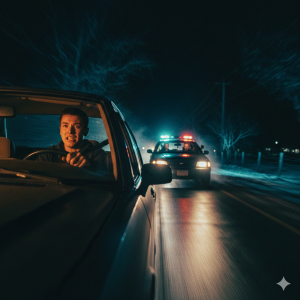
On the night of December 12, 2022, a deputy on patrol in Belvidere, Wisconsin spotted a speeding vehicle and clocked it at 66 miles per hour in a 55 zone. What should have been a routine traffic stop turned volatile in seconds. As the deputy initiated the stop, the car accelerated instead of yielding—its speed surging past 120 miles per hour. Behind the wheel was a 24-year-old man later identified as Jordan. With reckless swerves, blown stop signs, and mounting risk, Jordan pushed the chase into a perilous game of brinkmanship. Here’s how the pursuit unfolded, the moment of collision and capture, and the fallout that followed.
The deputy radioed updates as the vehicle raced toward city limits. With the pursuit now nearing populated areas, the sheriff advised termination: all units were ordered to back off, pass through town quietly, and look for the car without lights or sirens. The deputy slipped into the slowed hunt with lights and sirens off, calling out the turns as Jordan’s vehicle darted left onto County Road, then toward Cochrane. The suspect blew through stop signs, passed the fire station, turned off North Main, then right toward Cochrane—still pushing beyond caution.
Once the car moved beyond the city limits, the pursuit was re-initiated. The deputy reported speeds: 40, then turning left onto Fifth Street, heading toward Highway 35, northbound. The radio chatter stayed tense: “That’s them right there.” The deputy tried to take the car on Saver Hill. The suspect veered off, cut through a field, and in the scramble, stopped—only to suddenly reverse.
In that hard, backward lunge, Jordan slammed into a squad car, then fled again. It was a deliberate strike. At that moment, deputies noticed another occupant in the vehicle: two males inside. The radio pulsed with updates: “Two males in the car, they’re southbound now.” One deputy’s vehicle was disabled after the impact. Another unit pulled in to continue the chase.
Traffic ahead was light. A deputy urged caution and strategy: try to slow them down, box them a bit. The license plate was run—Wisconsin plate Adam-Crank-Victor 7935, confirmed. The deputy stayed close, narrating every move as speed fluctuated wildly, sometimes “well in excess of the fullest limits.” The suspect slammed on the brakes unpredictably, then took Prairie Moon road. Correction: two occupants in the vehicle, northbound on Prairie Moon.
As speeds finally dipped, a deputy seized the opening and performed a PIT maneuver—pivoting the suspect car into a controlled spin to end the pursuit. The vehicle came to a halt. Voices cut in sharply: “Cell phone, cell phone—Kamrowski—I took him out.” The scene shifted instantly from chase to arrest.
“Show me your hands—don’t move.” Officers converged with weapons drawn, demanding compliance. “Anybody in the back seat?” A tense chorus followed: don’t move, put the phone down, hands up, touch the ceiling. One deputy moved to unbuckle seatbelts and secure the occupants. From inside the car, Jordan’s passenger announced he had a gun in a holster and a valid CCW. The order remained absolute: “Do not move.”
“Sir—yes sir.” The instructions were crisp, the responses quick. The deputy began to carefully unload the weapon found in the passenger’s pocket. The stress spiked: “If you move, you’ll get a bullet—was I not clear enough?” The passenger pleaded he was just a passenger, on his way to pick up a car, worried about needing to be somewhere by five. The deputy wasn’t swayed. “Drag his ass off—Mitch, get out.” Hands behind the back. The arrests continued with intense caution.
As one deputy stood by the open car door, another detail emerged—a strong odor of marijuana wafting from inside. The car was confirmed in park, and the passenger was brought back for a careful pat-down: nothing in the waistband or shorts—just basketball shorts with pockets. The deputy secured the confiscated firearm, wallet, and belongings with measured calm. The helper tone mingled with reprimand: “This was stupid—that was my decision,” the passenger admitted, trying to shoulder blame. The deputy pushed back: “You put ourselves and other people at risk for their lives.”
In the car, the passenger acknowledged two vape devices in the cup holder were his—weed vapes. He explained why they ran: he didn’t have a license, was out on bond, and felt panicked. He showed his ankle monitor. The deputy helped with practicalities—offered a coat, checked whether EMS was needed, adjusted seating in the squad for height and comfort, even worked around adrenaline and cold.
Meanwhile, officers cataloged what they found: several vaping items in the vehicle, one of which later tested positive for marijuana. The conversation turned to jurisdiction: they confirmed they were still in Wisconsin. The passenger said he’d wanted to unload his gun before crossing into Minnesota. Another weed vape turned up, plus a small one-hitter that smelled like cannabis. The driver’s status appeared to be ID-only, not a valid license. Radio chatter reflected astonishment at the reckless choices—especially backing into the squad instead of surrendering in the field.
As deputies secured the scene, they coordinated towing the damaged vehicle, discussed charges and citations, and separated the driver and passenger. The passenger—apologetic, anxious, and angling for a ride to Fountain City—repeated that he hadn’t done anything beyond smoking weed, insisting Jordan had made the decisions. Deputies aimed to release the passenger quickly if appropriate, while treating evidence carefully. The passenger’s Samsung Galaxy phone—left on the dash—was retrieved. He admitted he only started recording when officers approached with guns drawn, not the entire pursuit. He unlocked the device to show what was captured.
Throughout, the tone alternated between stern procedure and human moments: the deputy reminding the passenger that everything in the squad was recorded, the passenger promising respect, calling his wife to say he was safe, explaining they were PIT maneuvered and that Jordan would go to jail. Officers debriefed: the pursuit started at 66 in a 55, lights activated, suspect floored it, cut through traffic, turned off to avoid units, ran fields, and struck a squad car hard on the reverse.
After searching, they concluded there wasn’t much contraband—just the vapes and the one-hitter. Still, the damage, risk, and flight added up to serious charges. The practical cleanup continued: tow the car, check bonds, sort IDs, and get statements. In the end, the passenger’s relief turned on one question: would he be in trouble? The deputy indicated they were trying to get him out of there quickly. Apologies and frustration lingered: “What an idiot… you just screwed me.”
Afterward, the pursuit length was measured: 11.5 miles. Jordan faced felony counts of vehicle fleeing/eluding an officer, possession of THC (second offense), and bail jumping times two. He also received misdemeanor counts for operating without a valid license—third offense within three years—and additional bail jumping. At the time of the incident, Jordan was already out on three bonds for three open cases.
Ultimately, about a month later, Jordan pled guilty to the felony charge of vehicle fleeing/eluding an officer. On the prosecutor’s motion, all other charges were dismissed. The court sentenced him to three years of probation with strict conditions: no possession or consumption of alcohol or controlled substances. His driver’s license was revoked for six months. He received 31 days of jail credit.
His traffic citations totaled more than $2,500; again, the prosecutor moved to dismiss all citations except one—operating with a restricted controlled substance. The rest were dropped.
In the echo of sirens fading and paperwork settling, the chaotic sprint through Belvidere ends not with violence, but with consequence: a hard stop on a dark road, a frightened passenger, a driver whose choices landed him in felony court, and a long probation that tries to save a life from spiraling further. The night began with 11 extra miles per hour—and almost became a tragedy. Instead, it became a cautionary narrative written in skid marks, radio calls, and the cold breath of December.
Disclaimer : This content may be created by AI for entertainment purposes. Any resemblance to real persons, events, or places is coincidental.