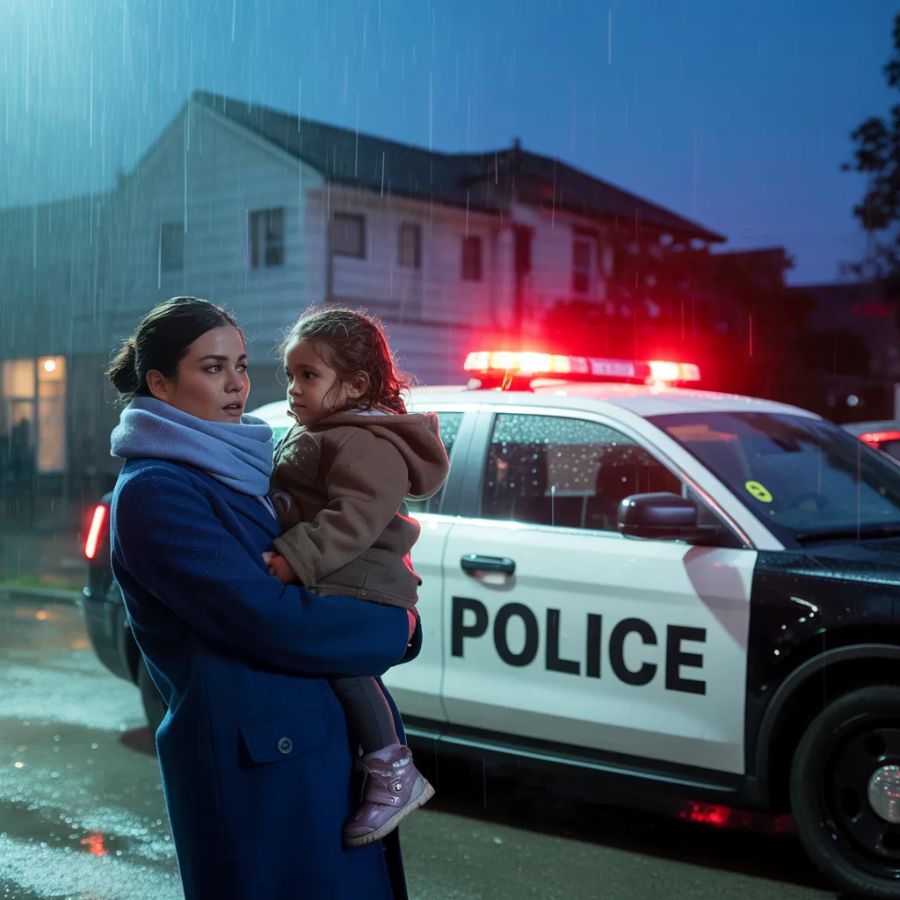
My parents said, “We are done raising your mistake. Get out and never come back,” and then they shoved my coat into my arms and pushed me and my five-year-old daughter, Lily, onto the porch—into a snowstorm so thick the streetlights looked like blurry halos.
My name is Rachel Dawson. I moved back home after my divorce when my ex stopped paying support and my savings disappeared into daycare and rent. My parents agreed to “help” on one condition: I followed their rules and kept my “drama” quiet. What they really meant was Lily should be quiet too—seen, not heard, like she was a stain on the family name.
That night started with a spilled cup of cocoa. Lily’s mitten knocked it over on the living room rug. I grabbed towels, apologized, promised I’d clean it. My father, Frank, didn’t even look at the rug. He looked at my daughter.
“There she goes again,” he said, disgust dripping from every syllable. “Your mistake.”
I told him to stop calling her that. My mother, Diane, snapped, “Don’t talk back. You owe us everything.”
Then Frank said it—the sentence that felt rehearsed. “We are done raising your mistake. Get out and never come back.”
“Lily is your granddaughter,” I said, my voice shaking. “It’s dangerous outside.”
My mother yanked the closet door open and tossed my keys into my purse like she was throwing out trash. “Not our problem anymore.”
I scooped Lily up, wrapped my scarf around her face, and stepped into the storm. The wind cut through my jeans. Lily’s cheeks were already red, her little body trembling against mine. I walked to my car—and realized my father had parked behind it, blocking me in.
I tried calling my sister. No answer. I called my ex. Straight to voicemail. My fingers were stiff with cold, and Lily kept whispering, “Mommy, I’m scared.”
I did the one thing I’d avoided for years: I dialed 911.
The dispatcher stayed calm. She asked where we were. She told me to keep Lily warm and find shelter. A patrol unit arrived within minutes, lights flashing against the snow like a warning. The officer took one look at Lily and his expression hardened.
“You were put out like this?” he asked.
I nodded. I couldn’t even speak without crying.
He led us into his warm cruiser, handed Lily a blanket, and said, “We’re going to get you somewhere safe.”
Then he asked, very quietly, “Do your parents have a history of doing things like this?”
Before I could answer, his radio crackled. Another officer’s voice came through: “We’re at the residence.”
Three hours after my parents kicked us out, there was a knock at their door. When they opened it—
they started screaming.
I wasn’t there to see my parents open the door, but I heard enough through the officer’s radio and later through the report to picture it perfectly. My father’s rage. My mother’s wounded innocence. The sudden panic when consequences showed up wearing a badge.
Two officers and a social services worker stood on my parents’ doorstep. They weren’t there to “mediate.” They were there because a five-year-old had been left in a blizzard and a call had been logged as child endangerment. My parents didn’t know that part. They thought they could shout their way out of reality like they always did.
According to the report, my mother immediately tried to control the narrative. “She’s unstable,” she said about me. “She’s dramatic. She’s trying to punish us.”
My father pointed at the snow and barked, “She can go to a hotel then. Not my problem.”
The social worker asked one question: “Why was the child outside in these conditions?”
My parents started talking over each other. That’s when the officers asked to come inside and take statements. My dad refused. My mom refused. They demanded the officers “leave their property.”
The officers didn’t leave.
Instead, they explained—calmly—that they had a welfare concern involving a minor child and that refusing to cooperate would not help them. My father reportedly stepped forward like he was going to block the doorway with his body. That’s when the screaming started.
While they argued, I was in the back of the cruiser outside a warming center, trying to calm Lily’s shaking hands. The officer gave me a cup of hot chocolate and asked if I had anywhere safe to go tonight. I didn’t. He told me they could connect me with emergency housing and that a social worker would follow up because Lily had been exposed to dangerous weather. The word “exposed” made my stomach twist. Like I’d failed her.
But then he said something that steadied me: “You did the right thing calling.”
At the warming center, Lily fell asleep with her head on my lap. I stared at her eyelashes dusted with melting snow and felt something harden inside me—not anger, exactly. Resolve.
When the officer returned, he had a printout in his hand. “Your parents are being cited,” he said. “And we’re documenting everything.”
He explained that my parents didn’t have legal custody of Lily. They had no right to put a child in danger to prove a point. They could refuse to let me stay in their home, but forcing a child out into a storm crossed a line that systems take seriously. My mother tried to claim she “told me to take the car.” The officer asked if she could explain why my vehicle had been blocked in. She couldn’t.
I filed a formal report that night. I also requested a protective order after the officer told me something chilling: “People who do this once sometimes escalate when they feel they’re losing control.”
The next day, I got a temporary room through an emergency family program. It wasn’t pretty, but it was warm, and Lily had a bed with clean sheets. Social services checked on us, asked questions, and gave me a list of resources—legal aid, housing support, childcare assistance.
My parents started calling. At first, angry. Then tearful. Then furious again. My father left a voicemail that ended with, “You’ll regret this.”
I didn’t respond.
Because three hours in a snowstorm taught me something I should’ve learned years earlier: love that comes with humiliation isn’t love. It’s control.
The hardest part wasn’t the paperwork or the programs or the waiting lists. The hardest part was accepting that the people who raised me were capable of looking at a shivering child and deciding punishment mattered more than safety.
In the weeks that followed, my parents tried to rewrite history. They told relatives I “ran off” and “dragged the baby into drama.” They conveniently skipped the part where they blocked my car. They skipped the screaming on the doorstep. They skipped the citation. The story they sold was always the same: Rachel is ungrateful. Rachel is emotional. Rachel is the problem.
For most of my life, I would’ve fought to correct that narrative. This time, I didn’t.
Instead, I built a new one.
I met with a legal aid attorney who helped me document everything—dates, messages, voicemails, the incident report number, the social worker’s notes. I didn’t do it because I wanted revenge. I did it because I needed protection. If my parents ever tried to call authorities on me out of spite, I wanted a record that showed who had put Lily at risk.
I found a childcare voucher program and picked up extra shifts at work. A coworker let me use her spare room for a month while my housing application processed. I sold a few pieces of furniture I’d been dragging around since my marriage because I realized I didn’t need my old life to build a new one. I needed stability. Warmth. Routine.
Lily adjusted faster than I did. Kids can accept change when they feel safe. She stopped waking up crying after the first two weeks. She started drawing again—stick figures holding hands under a sun that took up half the page. One day she said, casually, “Mommy, our house is quieter now.”
That sentence broke my heart and healed it at the same time.
My parents’ calls slowed when they realized I wasn’t coming back to beg. My mother tried one last tactic: she sent a message that read, “You’re tearing the family apart.”
I stared at it for a long time before I finally typed back one sentence: “You did that when you chose the storm over your granddaughter.”
After that, I went quiet.
Not because I didn’t have anything to say—because I finally understood that some conversations are traps. People who refuse accountability don’t want dialogue. They want surrender.
I still believe in forgiveness, but I’ve learned forgiveness isn’t access. You can forgive someone and still lock your door. You can love the idea of who someone should’ve been and still protect yourself from who they are.
Now, when I think about that night, I don’t just remember fear. I remember the moment I chose my daughter over my conditioning. Over “be the bigger person.” Over “they’re still your parents.”
If you were in my situation—if your parents kicked you and your child out into a snowstorm and then acted like you deserved it—what would you do next? Would you cut contact completely? Would you give them one chance to change? Would you file the report like I did, even if the family turned against you?
Tell me what you think in the comments. I’m asking because someone reading this might be standing in their own storm right now, wondering if they’re allowed to choose safety over blood.
Disclaimer : This content may be created by AI for entertainment purposes. Any resemblance to real persons, events, or places is coincidental.