For illustrative purposes only
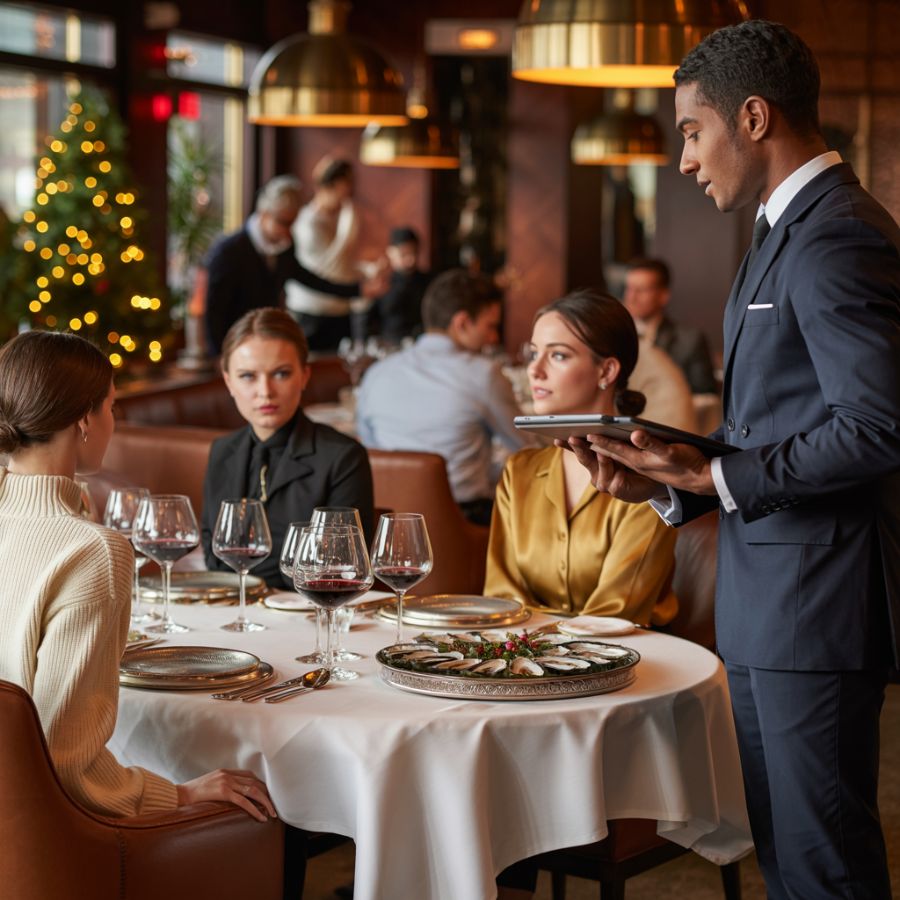
I run a restaurant people book six months in advance, and I still spend most nights carrying plates.
My name is Nico Romano. My grandparents came to the U.S. from Italy with two suitcases and a handful of family recipes. In the late seventies they opened a little Italian spot in Chicago. When they passed, my parents took over, expanded, and kept it alive through every trend and downturn.
I started working there at fifteen. Not “helping out,” actually working—sweeping, polishing, bussing, learning fast that charm and pressure are the tools of anyone trying to get something for free.
A few years ago my parents retired and moved between Florida winters and Midwest summers. They sold me the restaurant but kept a small percentage as income. I took the keys, took out a loan, and modernized everything: new logo, better lighting, open kitchen, upgraded bar, and a tasting menu that turned us from “that cute old place” into a destination.
For months I thought I’d destroyed three generations of work. Then a local food YouTuber featured us, and the reservations exploded. Reviews poured in. Corporate parties booked. Sometimes celebrities came in quietly and sat like normal people who just wanted pasta.
Holiday season became our Super Bowl. By December, people had to reserve in July. On busy nights I don’t hide in the office—I’m on the floor, greeting guests, running plates, solving problems. If it’s a high-profile night, I wear a dark jacket so customers assume I’m management, because people behave better when they think you can end their night with one sentence.
That’s why I was at the host stand when six women walked in.
Five looked early twenties, dressed for photos. The sixth looked mid-twenties, hair perfect, chin lifted, moving like she owned the doorway. She talked the whole time they crossed the lobby.
“This place is insane,” she announced, loud enough for other guests to hear. “The food is unreal. Sometimes celebrities come in. I told you I’ve got us covered.”
I stepped forward with my practiced smile. “Good evening. Party of six?”
“Obviously,” she said. “We need a table.”
“Of course. What name is the reservation under?”
Her smile twitched. “We didn’t make one. It’s fine. The owner is a personal friend of mine. He always keeps VIP tables open for special guests, and we’re taking one tonight.”
Old trick. Claim a connection, manufacture urgency, pressure the staff member who doesn’t get paid enough to fight. The problem was she’d chosen the one person in the building who knew exactly which tables were held and why.
“I’m sorry,” I said, still polite. “We’re fully booked, and we can’t seat anyone without a reservation.”
She stared, then laughed once, sharp and fake. “You don’t understand. I know the owner.”
Behind her, one of the younger women raised her phone. The leader pointed at my chest. “Take a picture of him. He’s about to be unemployed.”
The flash popped. Two others chimed in, giggling. “Yeah, kiss your minimum-wage job goodbye.” “He thinks he can talk to you like that?”
The leader leaned closer. “Listen. Give us the VIP table or I’ll call the owner. You’ll be scrubbing toilets by the end of the week.”
I could have ended it right there by saying, “Ma’am, I am the owner,” and watched her face collapse. I could have called security. I could have told her to leave.
But the dining room was packed, the lobby was tight, and I didn’t want a screaming match in front of families celebrating.
So I chose the third option: let her win, then let her choices teach the lesson.
I softened my expression. “Of course, ma’am,” I said. “Please follow me.”
Her posture snapped taller. “See?” she told the others. “Respect gets you places.”
I led them to the back alcove, one of the three VIP tables we kept open in case a last-minute celebrity walked in. Normally, reserving it required a deposit and a minimum spend. Tonight, it was empty.
I pulled out chairs like I was grateful for the honor of serving them. “To make up for the confusion,” I said, “the first three rounds of drinks are on the house.”
The table squealed. The leader tossed her hair. “Girls, tonight is on me.”
I placed a small leather folder on the table. “We just need one credit card and an ID to keep on file for the complimentary rounds. We’ll return them before you leave.”
She handed them over without hesitation, like consequences were for other people.
I brought the VIP menus—no prices, all temptation: imported oysters, caviar service, white truffle upgrades. I warned them the kitchen was delayed because we were slammed.
They barely listened. They ordered cocktails immediately.
Round one vanished. Round two arrived. Round three followed, free and generous. They drank on empty stomachs, laughing louder with each glass.
An hour later the leader snapped her fingers. “Where is our food?”
“I’ll check,” I said.
I hadn’t even reached the service station before she called again, complaining that the “free drinks were taking too long” and asking if she could “get another round while she waited.” I asked, politely, if they wanted anything else. They ordered two more rounds without blinking.
At the bar, my bartender murmured, “They’re already talking about coming back and bullying you again.” He had overheard one of them giggle, “He’s cute, but I’d never date a waiter,” and another add, “He’ll always cave. Watch.”
That’s when my patience snapped into focus. I’d been tempted to let it go, but not after that.
One of the younger women tipped her head at me, eyes glossy with mean curiosity. “Do you ever feel like your life is pointless,” she asked, “because all you became is a waiter?”
The table erupted.
I looked at their VIP menus, their empty glasses, and the credit card in my pocket.
“Noted,” I said quietly, and walked toward the kitchen, already deciding how the rest of their night would end.
In the kitchen I didn’t have to give a speech. My staff knew that look.
“Hold their apps a little,” I told my chef. “Not forever—just enough that they keep ordering.”
He nodded once. We were slammed anyway, so the delay would look natural. I walked to the bar and leaned close to my lead bartender.
“VIP alcove,” I said. “After the comped rounds, everything is full price. Offer upgrades. If they ask, answer honestly. If they don’t ask, don’t volunteer numbers.”
When I returned to the alcove, the two paid rounds had arrived. Their cheeks were flushed. Their laughter had turned sharp.
“We’re starving,” Kendra announced, as if hunger was my fault. “But keep the drinks coming.”
“Of course,” I said. “While you wait, may I recommend our West Coast oysters? They came in this afternoon.”
One of the girls blinked at the platter photo. “Oysters are expensive.”
Kendra waved her off. “We’re at a VIP table. It’s fine. Bring them.”
I wrote it down, then added, casually, “We also have a caviar service tonight. It’s popular with our private clients.”
Kendra smirked, enjoying the reaction. “Do it. And make it the fancy one.”
I brought the oysters first: glossy shells on crushed ice, lemon wedges, mignonette. They filmed it before they ate it. Someone declared, “This is so celeb-coded,” like that was a flavor.
When the appetizers finally hit—salads, burrata, fried calamari—they were already tipsy, and their manners fell off like cheap earrings.
Kendra leaned back and said, “Tell your kitchen to work faster. We’re important.”
I smiled and walked away, because the kitchen was already working as fast as physics allowed.
Over the next hour, their confidence inflated with every pour. They stopped asking for things and started snapping for them. One girl clicked her fingers at Mateo, my actual waiter, and he shot me a glance that said, Are we really doing this? I gave him a tiny nod: keep it professional.
The VIP menus did the rest. No numbers, just delicious words.
“What’s the truffle option?” Kendra asked, tapping the page.
“Fresh white truffle shaved tableside,” I said. “Holiday favorite.”
“Add it,” she said. “To whatever.”
When she learned we could add it to pasta, to steak, to risotto, she treated it like a trophy and requested it twice.
They ordered the imported oysters again “because the first platter was small.” They ordered a bottle of champagne because one of them wanted a photo with it. They ordered caviar refills because Kendra liked saying the word.
Every time I offered a choice, Kendra chose the one that sounded like it belonged in a movie. She never once asked, “How much?”
At one point I almost felt bad. Five of the girls were clearly following Kendra’s lead. They laughed when she laughed, nodded when she nodded, and looked nervous whenever the staff brought something that seemed too fancy. I considered cutting them off, telling Kendra the kitchen was closed, ending the night with a smaller bill and a bruised ego.
Then I passed the alcove again and heard Kendra say, “He thinks he’s somebody because he wears a jacket. He’s still a waiter. People like that exist to serve.”
The girl who’d asked me about my “meaningless life” laughed the loudest.
So I kept going.
By ten thirty the dining room had thinned. My last reservation had been seated, finished, and left. The VIP alcove was still ordering like time didn’t apply to them.
Mateo brought me their running total on the POS screen, eyes wide. “Nico,” he whispered, “this is… a lot.”
“I know,” I said. “Keep water on the table. No overserving. And don’t argue with them. They want a fight.”
Near closing, I printed the checks. The five younger women, splitting their tabs, had each built up between five and six hundred dollars—still painful, but not catastrophic. Kendra’s check was the one that mattered, because she’d declared, “Tonight is on me,” and she’d ordered accordingly.
Her total, with tax and tip, landed at $4,233.23.
I carried it myself, set it down in a leather presenter, and waited.
Kendra opened it and went still. The change in her face was instant and beautiful. Drunk confidence evaporated, replaced by raw panic.
“This is a joke,” she said.
I took the bill, scanned it, and put on my best concerned expression. “I’m so sorry. Let me get the correct one.”
Relief flooded her features. She turned to her friends and hissed, loud enough for me to hear, “He brought the wrong bill. What an idiot.”
I walked away, counted to thirty, then returned with the exact same check.
Kendra opened it again and exploded. “Are you kidding me?”
I kept my voice level. “Is there an item on the bill you didn’t order?”
The girls leaned in, sobering a little as they traced line by line. The first lines clearly showed three complimentary rounds. After that: cocktails with names that sounded like vacation homes, oysters, champagne, caviar, truffle, premium entrées.
They pulled out phones and added everything three different ways. The number didn’t move.
Kendra’s pupils darted. “One second,” she said, and stood abruptly. “I need the restroom.”
For the first time all night, I worried she’d try to run and leave her friends holding the wreckage. I didn’t want a chase scene in my dining room, so I stepped close as she passed and spoke quietly.
“Just a reminder,” I said, gentle as sugar, “we have your card and ID on file. We’ll return them when the bill is settled.”
Her jaw tightened. “Yeah. I know.”
Ten minutes later she returned with fresh mascara and slightly smeared eyeliner. She’d been crying and trying to erase it. She approached me like she was walking onto a stage.
“The food was terrible,” she announced. “The drinks were disgusting. Service was slow. You need to cut this in half.”
“I’m sorry you didn’t enjoy it,” I said. “But I can’t discount items you ordered and consumed.”
Her voice rose. “My friends will help pay, but you still need to cut it. This is ridiculous.”
Then her eyes lit up with the idea she’d been building in the bathroom. “Also,” she said, “I know the owner. He’ll be furious you’re treating me like this.”
She shoved her phone toward me. A contact was labeled with my restaurant name plus “Owner,” and below it were text messages: Don’t worry about the bill. VIP is yours tonight. Tell the staff to take care of you.
I understood immediately. She’d renamed a contact, deleted earlier messages, and built a fake thread in ten minutes.
I tapped the contact details and saw the number.
“That isn’t the owner’s phone,” I said.
Kendra scoffed. “He has multiple phones for business. Obviously.”
I nodded slowly. “Great. Let’s call him. If he answers and tells me to take fifty percent off, I’ll do it.”
The color drained from her face. “No. Don’t call him. He’s busy.”
“It’s one call,” I said. “Should be easy.”
She started ranting instead, louder and louder, drawing attention from the last few guests and my staff. She called me names, called the restaurant a scam, threatened reviews, threatened lawsuits, threatened to “ruin this place.”
That was enough.
My tone dropped from polite to flat. “Cut the act. You don’t know the owner, and you’ve never been here before.”
Her mouth opened, then closed.
“I’ve worked in this building since I was fifteen,” I continued. “My grandparents opened this restaurant. My parents ran it for decades. And I’m the sole owner.”
The table froze. One of the younger women whispered, “Oh my God,” like the words hurt.
Kendra’s eyes filled. “You’re lying.”
I didn’t raise my voice. I didn’t need to. “I gave you the VIP table you demanded,” I said. “I didn’t charge you the VIP table fee. I comped three rounds of drinks. After that, you ordered high-end cocktails and VIP menu items without asking prices, and you treated my staff like they were disposable.”
Kendra’s shoulders shook. “I didn’t know.”
“You didn’t ask,” I said. “And you threatened to get me fired.”
She glanced at her friends, searching for rescue. Their expressions had shifted from amused to betrayed. They weren’t thinking about my feelings; they were thinking about their own wallets.
I held out the check presenter. “Pay the bill. If you don’t, I call the police and provide your identification.”
Kendra stared at me for a long, silent moment, then took the pen with trembling fingers and signed. Tears hit the paper.
The younger women dug into their wallets and handed her whatever cash they had—twenties, tens, a few crumpled bills—with panicked promises to Venmo her later. Kendra clutched the cash like it was a life raft.
When the group finally stumbled out into the winter air, the dining room felt cleaner, like we’d aired it out.
Two days later an angry man stormed in during lunch prep and demanded to speak to “whoever did this” to his daughter. Kendra followed him, head down, hiding behind her hair.
My bartender told him the manager was busy. I finished my paperwork in the office, took my time, and then brought them back.
In my office the man started in immediately. Chargeback threats. Lawyer threats. “You took advantage of young women,” he barked. “You stole from my daughter.”
I didn’t argue. I opened a folder on my computer and turned the screen toward him.
“We have security footage from the VIP alcove,” I said. “With audio.”
His eyebrows shot up. “Audio?”
“The VIP area is monitored closely,” I replied. “We’ve had incidents in the past. We keep clear records.”
I hit play.
Kendra’s voice filled the room, bright and cruel, calling my staff minimum-wage nobodies. The “scrubbing toilets” threat. The laughing. The “meaningless waiter” comment. The orders. The upgrades. The moment she said, “Tonight is on me.” The part where she bragged she knew the owner.
The father’s face changed as the video rolled. Anger didn’t disappear; it redirected.
When the clip reached the check moment, Kendra’s voice cracked on-screen, and the father’s jaw clenched. When it reached the fake text thread and the ranting, his eyes narrowed to slits.
He stopped the video with a sharp click. “Are you done?” he asked his daughter, voice low.
Kendra’s mouth trembled. “Dad—”
He stood so fast the chair scraped. “You embarrassed yourself, you embarrassed me, and you tried to bully people who were working.”
He turned to me, still furious but no longer confused. “How much of this did she pay?”
“All of it,” I said. “With her card. Her friends added some cash.”
He exhaled like he was trying not to explode in my office. Then he pointed at the door. “Let’s go.”
Kendra started crying again. “It wasn’t fair—”
The father didn’t soften. “Move.”
They left with him lecturing her the entire way down the hallway, his voice fading into the dining room like a storm moving off.
I haven’t seen them since. No lawyer letter. No chargeback. No review war. Just silence.
I framed the original receipt—the one with $4,233.23 at the bottom—and set it on my desk beside a photo of my grandparents standing outside the old storefront, smiling like they’d already survived the hardest part.
People sometimes ask if I feel guilty. I don’t. I didn’t force anyone to order truffle twice or treat my staff like dirt. I gave them exactly what they demanded: the VIP table, the attention, the fantasy. The only thing I refused to give them was immunity.
The funniest part is that I didn’t even lose money on the table. The VIP alcove was intended to stay empty unless a late guest arrived. The comped drinks were a marketing cost at worst. The paid upgrades and cocktails more than covered it.
It was watching a bully realize the world doesn’t rearrange itself because she snaps her fingers—and knowing my staff saw it too.
Disclaimer : This content may be created by AI for entertainment purposes. Any resemblance to real persons, events, or places is coincidental.